

The Future of Animation in India: Original IPs vs Outsourcing
India's animation industry stands at a thrilling crossroads. With a market valuation of USD 1.89 billion in 2023 and projections to reach USD 25 billion by 2032, the sector is experiencing unprecedented growth at a CAGR of 37.76%. But the real question isn't just about size—it's about identity. Will India remain the world's animation factory, or will it emerge as a creator of original stories that captivate global audiences?


The Outsourcing Giant
For decades, India has been the go-to destination for international animation studios. American animators charge $125 per hour while their Indian counterparts deliver the same quality at $25 per hour. A full-length animated movie that costs $120-180 million in America can be produced for just $10-30 million in India. This cost advantage has made Indian studios indispensable to global productions.
Companies like Toonz Animation, Xentrix Studios, and DNEG India have built impressive portfolios working on Hollywood blockbusters. Films like "The Incredible Hulk," "The Narnia franchise," and "X-Men First Class" all had their animation produced in India. The country now accounts for 15% of the global animation outsourcing market.
Yet this success story has a catch. As industry expert Jayanthi Narasimhan from Acropetal Animation notes, "India is a land of storytellers since ages, but sadly the big players failed to cash in on the original content creation and ended up as backend work suppliers to studios abroad".
The Original IP Revolution
Things are changing rapidly. Studios like Green Gold Animation have proven that Indian original content can be commercially successful with their "Chhota Bheem" franchise. Reliance Animation has made "steadfast commitment to crafting original intellectual property that resonates with audiences of all ages", creating stories that are uniquely Indian yet universally appealing.
The government is backing this shift with concrete action. The National Centre of Excellence for AVGC in Mumbai, 100% Foreign Direct Investment policies, and various state-level incentives are all designed to encourage original content creation. The recent WAVES 2025 Animation Film Makers Challenge announced 42 finalist projects focusing on original storytelling, with each project capable of generating employment for 100-300 individuals.
The Effect of Technological Growth in India
The rise of affordable, powerful animation tools is democratizing content creation. Cloud-based workflows, AI-powered animation assistance, and real-time rendering engines are making high-quality production accessible to smaller studios. This technological shift means that Indian studios no longer need massive budgets to compete on visual quality.
OTT platforms like Netflix, Amazon Prime Video, and Disney+ Hotstar are investing heavily in original Indian animation content. This demand for localized, culturally relevant stories is creating new opportunities for Indian storytellers to move beyond outsourcing work.
What does the future hold?
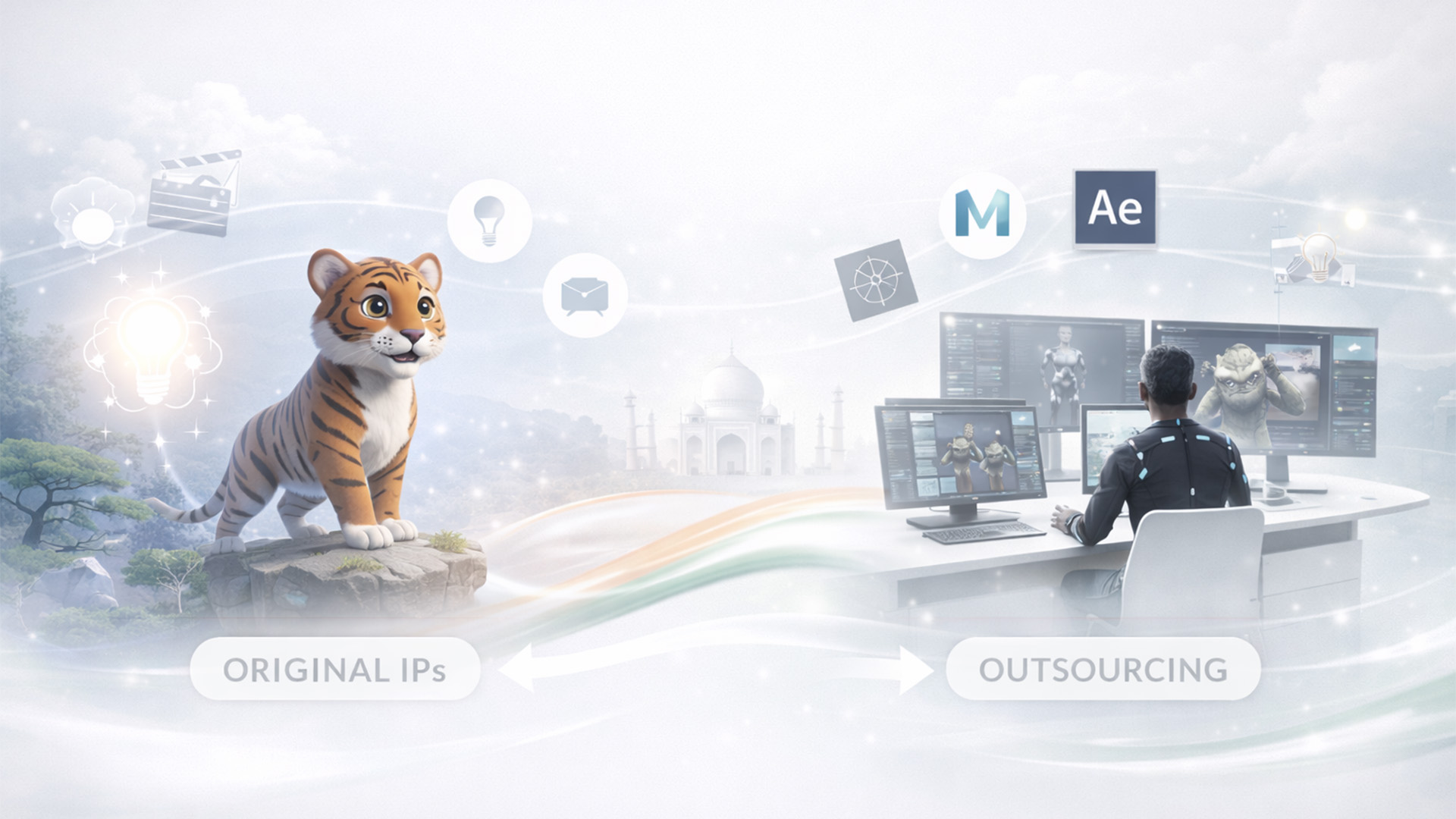
The future of Indian animation lies in a hybrid approach. India's animation industry doesn't need to choose between outsourcing and original content—it can excel at both. The outsourcing work provides steady revenue and keeps teams skilled in the latest techniques, while original IPs build brand recognition and cultural influence.
Regional language content in particular, has shown huge promise. With 500 million Indians consuming digital content and regional language storytelling seeing unprecedented growth, there's enormous potential for locally rooted stories that can then be adapted for global audiences.
The industry is maturing from a service-based model to one of co-production and original IP creation. As costs remain competitive and technical capabilities continue to improve, Indian studios are positioned to become not just service providers, but creative partners and IP owners in the global entertainment ecosystem.
The next chapter of Indian animation will be written by studios brave enough to tell their own stories while maintaining the technical excellence that made them global partners in the first place.
Discussion
No comments yet. Be the first to share your thoughts!