Hybrid Learning Models for Creative Tech: What Works
The creative technology sector has unique educational challenges. How do you teach someone to be a visual effects artist, game designer, or animator when the field demands both technical precision and artistic vision? The answer? Hybrid learning models that combine the best of online flexibility with hands-on, in-person experiences. As the creative tech industry evolves rapidly, so must the way we prepare the next generation of digital artists and technicians.


The Creative Tech Learning Challenge
Traditional education models often struggle with creative technology fields. Animation, VFX, game design, and digital art require expensive software, high-performance hardware, and mentorship from industry professionals. Students need to master both technical skills—like coding, 3D modeling, and rendering pipelines—and creative abilities like storytelling, design thinking, and artistic composition. The rapid pace of technological change in creative fields adds another layer of complexity. Software updates, new tools, and emerging technologies like AI and virtual production mean that curricula must be constantly updated. A purely classroom-based approach often lags behind industry requirements, while purely online learning can miss the collaborative and hands-on elements essential to creative work.
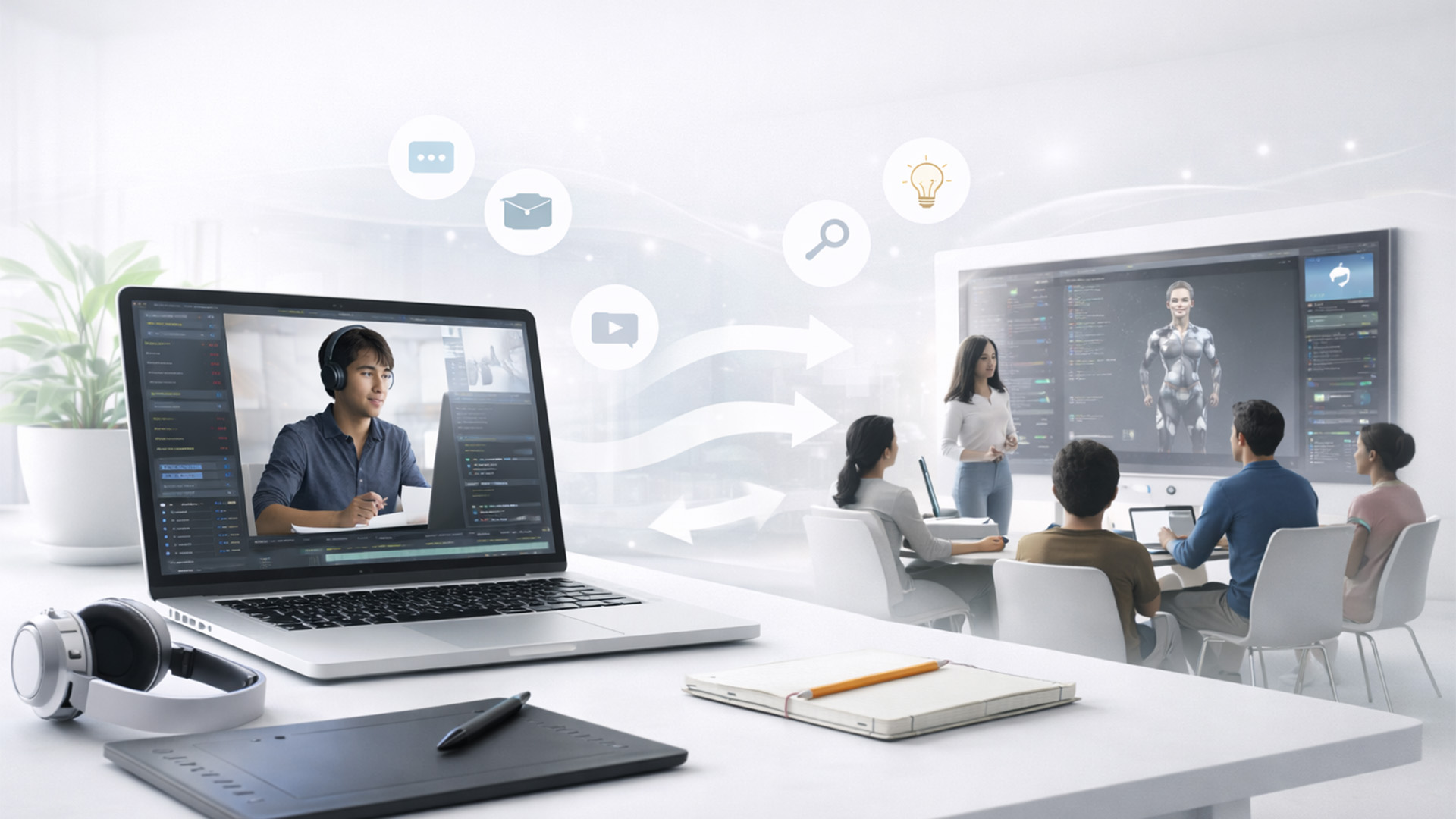
Hybrid learning addresses these challenges by creating flexible, technology-integrated educational experiences. The model typically involves three stages: online self-learning for theoretical concepts, in-person collaborative sessions for hands-on work, and consolidated online/offline learning for skill refinement.
For creative technology, this structure is particularly effective. Students can learn software basics, color theory, or programming fundamentals online at their own pace. Complex topics like 3D pipeline workflows or game engine architecture can be introduced through interactive online modules. Meanwhile, in-person sessions focus on collaborative projects, equipment-intensive work like motion capture or virtual production, and mentorship from industry professionals.
Technology Integration
Successful hybrid teaching in creative tech education leverages cutting-edge tools that mirror industry workflows. Students use the same software they'll encounter professionally—Maya for 3D animation, Unreal Engine for game development, or DaVinci Resolve for color grading. Cloud-based collaboration tools allow seamless project handoffs between online and in-person sessions. AI-powered personalization is also becoming increasingly important. Adaptive learning systems analyze student performance and adjust content delivery accordingly. For instance, a student struggling with character rigging might receive additional online tutorials and practice exercises, while someone excelling in technical areas might be fast-tracked to advanced creative challenges.
Effective hybrid programs follow several best practices. They begin with clear learning objectives that map to industry requirements. Students need to understand not just how to use tools, but why certain workflows exist and how they fit into larger production pipelines. Content delivery varies by learning type. Theoretical knowledge—like understanding light physics for rendering—works well in self-paced online modules. Technical skills—like software proficiency—benefit from guided video tutorials with interactive exercises. Creative skills—like visual storytelling or team collaboration—require in-person workshops and critique sessions.
Assessment strategies will blend automated technical testing with human-evaluated creative work. Students might complete online quizzes about rendering principles while also presenting portfolio pieces to industry professionals during in-person sessions.
The Importance of Industry Connection
The most successful hybrid programs maintain strong industry connections. Guest lectures from working professionals, live project collaborations with studios, and internship programs bridge the gap between education and employment. Virtual studio visits and remote mentorship sessions extend these connections beyond geographic limitations.
Real-world project experience is crucial. Students work on actual client briefs, participate in film productions, or contribute to published games. This practical application helps students understand professional standards, deadlines, and collaboration requirements that purely academic projects often miss.
Common Challenges
Hybrid creative tech education faces several recurring challenges. Equipment access remains a significant concern—not all students have high-end computers capable of running professional software. Successful programs provide cloud-based workstations, equipment lending programs, or extended lab access to ensure equity. Maintaining engagement across different learning modalities requires careful design. Online components must be interactive and regularly updated. In-person sessions should focus on activities that genuinely benefit from physical presence—collaborative brainstorming, equipment training, or peer critique sessions. Faculty training is often overlooked but crucial. Instructors need skills in both online content creation and in-person facilitation. They must understand current industry practices while being able to adapt to new technologies and pedagogical approaches.
Measuring Success
Many factors need to be considered when asking if a program is “successful.” Technical competency is measured through skill-based assessments and portfolio quality. Industry readiness is evaluated through internship performance and job placement rates. Long-term career success provides feedback on program effectiveness. Student satisfaction and engagement metrics help identify areas for improvement. Regular feedback from industry partners ensures curricula remain relevant and up-to-date.
The future of creative tech education lies in hybrid models that combine technological flexibility with hands-on experience, preparing students for careers in industries that value both technical mastery and creative vision. Success requires thoughtful integration of online and offline elements, strong industry partnerships, and continuous adaptation to technological change.
Discussion
No comments yet. Be the first to share your thoughts!