
Hollywood to Bollywood: The Expanding Role of Indian VFX Houses
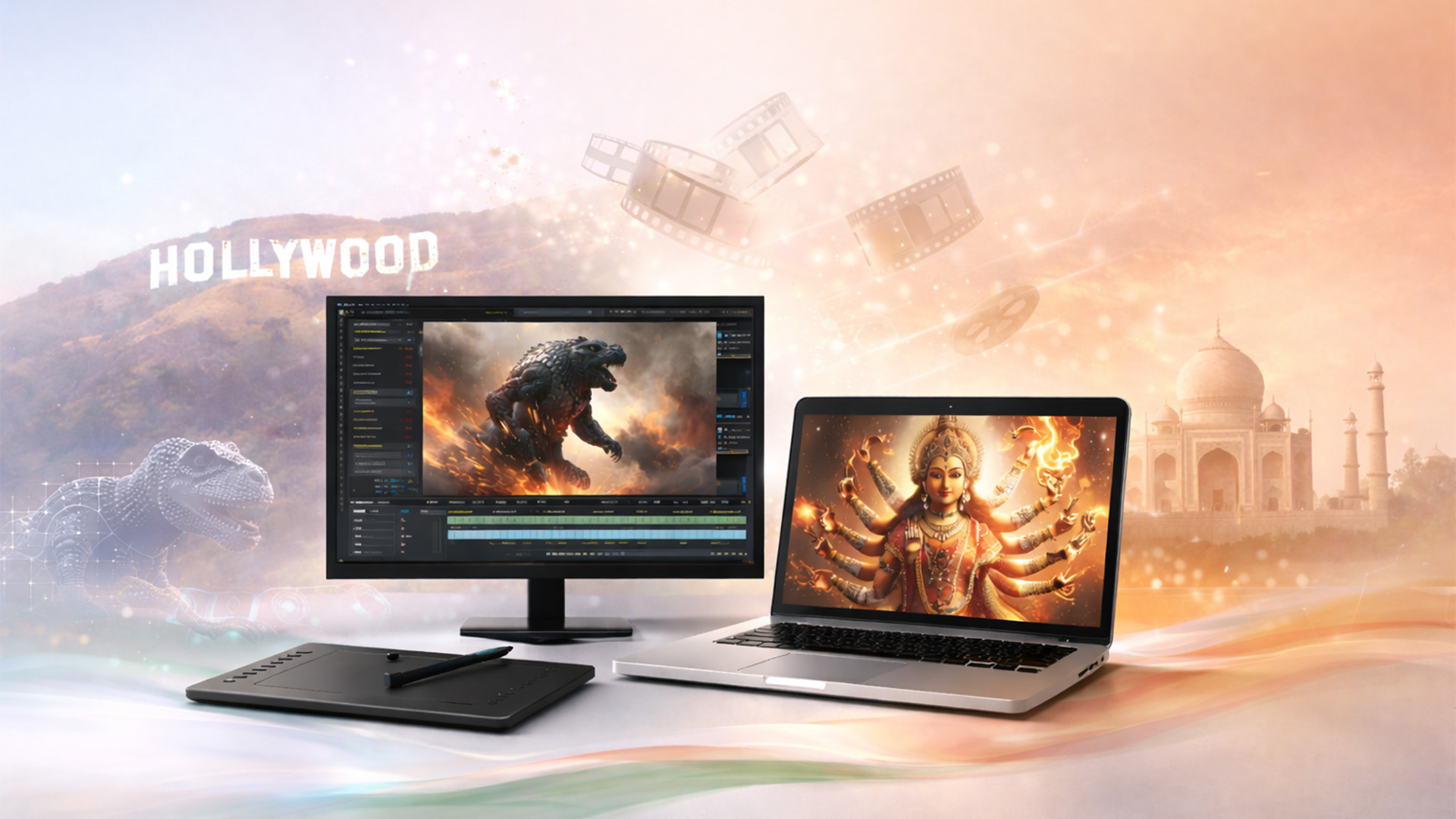
Indian VFX studios have quietly become the backbone of global entertainment. From Marvel's universe-spanning epics to Bollywood's mythological spectacles, Indian artists are behind the visual magic that defines modern cinema. What started as a cost-effective outsourcing solution has evolved into something far more significant—a creative partnership that's reshaping both Hollywood and Bollywood.


The Outsourcing Success Story
The numbers tell a compelling story. Prime Focus Ltd. worked on films like "Avatar" and "Interstellar". DNEG India contributed to "Dune" and "Tenet". Red Chillies VFX handled effects for both Bollywood hits like "Ra.One" and international projects. An estimated 70% of revenue that Indian VFX studios generate comes through these international partnerships, bringing not just financial benefit but also exposure that is crucial to global standards.
The cost advantages remains a significant factor for this. While the hourly rates have increased over the years, Indian VFX studios still offer substantial savings compared to their Western counterparts. But the real value proposition has expanded beyond cost to include technical expertise, scalable talent pools, and the ability to handle complex, high-volume work across time zones. Indian VFX houses are no longer just service providers—they're innovation hubs. Studios like Makuta VFX created the breathtaking environments in "Baahubali", while Prime Focus pioneered breakthrough work in stereo 3D conversion. The quality gap between Indian and international work has essentially disappeared, with Indian artists now leading teams on Oscar-winning projects.
The adoption of cutting-edge technologies is also accelerating, making the Indian animation industry comparable with its western counterparts. AI-powered tools, virtual production setups, and real-time rendering capabilities are becoming standard in major Indian studios. Companies are investing heavily in R&D, developing proprietary tools and workflows that give them competitive advantages in the global market.
Bollywood's VFX Revolution
The transformation in the industry is equally dramatic in domestic cinema. Bollywood's VFX budget allocation has increased from 5% to 18% since 2020. Films like "Brahmāstra," "RRR," and "Baahubali" have demonstrated that Indian cinema can deliver Hollywood-quality visual effects while telling distinctly Indian stories.
This shift represents more than just technical advancement—it's a creative awakening. Indian filmmakers are no longer constrained by practical limitations. Mythological epics, fantasy adventures, and high-concept science fiction are all becoming viable genres in Indian cinema, thanks to the VFX capabilities developed through years of international collaboration.
Global Recognition and Partnerships
The relationship between Indian VFX houses and international productions has evolved from vendor-client to creative partnership. The proven track record of studios like DNEG, Prime Focus, and MPC have established Indian operations not just for cost savings, but to tap into the creative talent pool. These partnerships enable 24/7 production pipelines, with work flowing seamlessly between London, Vancouver, and Mumbai. Major studios such as Disney and Warner Bros now collaborate directly with Indian artists on projects requiring extensive post-production work. This collaboration has elevated Indian VFX artists to key creative positions, where they're involved in artistic decisions rather than just execution.
With over 4,000 VFX studios of various sizes operating across India, the ecosystem has matured significantly. From large, established firms to boutique studios offering specialized services, the landscape provides options for every type of project and budget. The government's support through policies like 100% FDI in the AVGC sector and the establishment of centers of excellence is creating a favorable environment for continued growth. State governments are offering subsidies and infrastructural facilities, recognizing VFX as a key component of the creative economy.
The Road Ahead
The future of Indian VFX lies in balancing international collaboration with domestic storytelling. The most successful studios will be those that excel at both—delivering world-class technical services while developing distinctive creative voices. As the global VFX market is projected to reach $30 billion by 2030, Indian studios are positioned to capture a significant share through their combination of technical excellence, creative talent, and cost competitiveness. The transformation from service provider to creative partner is complete, and the next chapter involves leading the global conversation about the future of visual storytelling.
Discussion
No comments yet. Be the first to share your thoughts!